Social media has become the go-to for staying connected with friends, family, and people around the globe. But it’s far from perfect.
Spending too much time on social media can be tough on your mental health, leading to more anxiety, feelings of not being good enough, and depression. This often happens because humans are just passively scrolling and constantly seeing everyone’s perfect, curated lives.
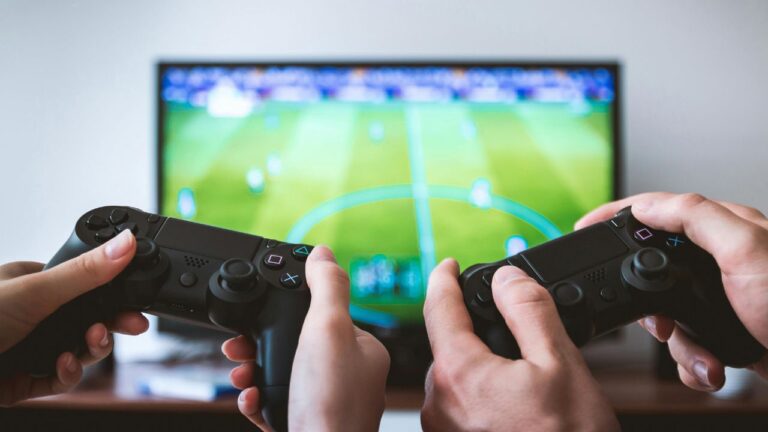
In the midst of these challenges, online gaming, which many see as an isolating activity, is emerging as a healthier alternative for social interaction. Why? Let’s explore that here.
Gaming Builds Real Connections
Social media gives us tiny, curated glimpses into people’s lives. But those snippets rarely form deep or lasting friendships. Online gaming offers a different, more meaningful way to connect.
Teamwork is at the heart of online gaming. Whether you’re teaming up with friends to take down a massive boss or strategizing to win a competitive match, everyone’s working toward a common goal.
This creates a unique kind of bond you don’t find anywhere else online. You build friendships by repeatedly teaming up, celebrating big wins, and recovering from tough losses.
These digital connections can be surprisingly deep and authentic. For many people, gaming communities provide a low-barrier, accessible space where they can feel a sense of belonging.
One survey finds that 85% of players felt more at ease sharing information in the virtual world than in the real world.
But are these friendships built to last? Some people argue that gaming friendships are only temporary, lasting just as long as the game itself. But a study published in ScienceDirect revealed that around 5% form bonds with new friends and continue those relationships offline.
Healthy Competition Trumps Toxic Comparison
Social media platforms show only the best parts of someone’s life. This can lead to what is called social comparison. Then there is the external desire for validation, such as likes, followers, and social status.
When self-worth is tied to online validation, the consequences can be severe. They can range from anxiety and depression to, in extreme cases, self-harm.
It’s no surprise that social media companies are now facing mental health lawsuits. According to TorHoerman Law, plaintiffs allege that they deliberately designed their platforms with addictive features.
Of all platforms, TikTok is the most addictive platform, with Instagram landing in second place. As more and more parents join the lawsuit, people are beginning to explore Instagram and TikTok lawsuit eligibility to understand whether they are affected.
In contrast, gaming is different. Competition exists, but it feels healthier. Winning or losing is based on your skills and effort, not your looks.
Losing isn’t the end either; it’s a temporary setback. It can teach you valuable lessons about resilience and motivate you to get better. As it focuses on self-improvement, it’s a much healthier rivalry.
Active Engagement Beats Passive Scrolling
Scrolling through feeds is easy but empty. You move from post to post without much thought. Hours go by, and you gain nothing meaningful. That is the trap of passive engagement.
This phenomenon, often referred to as zombie scrolling, has been consistently linked to negative mental health outcomes. The Journal reveals that evidence links this behavior to conditions, like depression and anxiety.
Gaming, by its very nature, demands active participation and mental effort. It requires players to solve problems, make split-second decisions, and coordinate with others in real time. This active engagement can lead to a flow state. That is, a state of mind characterized by complete immersion, focus, and a loss of time awareness.
This immersive experience is a positive form of temporary escape from reality, providing a constructive mental break that can reduce stress and anxiety. Unlike the mindless distraction of passive scrolling, gaming immersion redirects the mind’s focus toward a challenging and engaging task.
This active engagement has real benefits for your brain. It can sharpen your core mental skills, like attention, memory, and decision-making. For example, action games can improve your ability to see subtle details, focus on specific areas, and track multiple moving things at once.
A Mindful Approach to Digital Living
No one’s saying social media is pure evil; it has its perks. But when you weigh the mental health impact, gaming often provides a more positive, engaging, and community-driven experience.
Scrolling often leaves people drained, anxious, or comparing themselves to others. Gaming, on the other hand, offers something more positive. It brings people together through teamwork, laughter, and shared goals. The competition is healthier, the engagement is active, and the stress relief feels real.
Ultimately, it’s not about choosing to give up one for the other; it’s about picking the option that makes you feel happier and more connected. And for many, gaming is proving to be a healthier form of social media.


He is a computer engineer by day and a gamer by night. He has played many different games, like retro games like Contra, classic Mario, to AAA games. He likes to share his passion for gaming through his guides.